

Clinical Efficacy PROUD-PV and CONTINUATION-PV Study Results
Demonstrated durable disease control in polycythemia vera
In the Phase III PROUD-PV study and its extension (CONTINUATION-PV), BESREMI® demonstrated increasing rates of complete hematological response (CHR)* over time in adults with polycythemia vera.
Defining complete hematologic response (CHR*)

hematocrit < 45%

leukocytes < 10 × 10⁹/L

platelets < 400 × 10⁹/L
CHR rate*†

Median duration of longest CHR*†: NE (95% CI: 38.7 months, NE)
Median time to first CHR*†: 6.46 months (95% CI: 6.0, 9.2)
CHR rate*† + normal spleen
Median duration of longest CHR*† + normal spleen:
15.18 months (95% CI: 9.7, 21.1)
Median duration of longest CHR*† + normal spleen:
15.18 months (95% CI: 9.7, 21.1)
Median time to first CHR*† + normal spleen: 11.90 months (95% CI: 9.2, 14.7)
- CHR defined as hematocrit <45% without phlebotomy (≥3 months since last phlebotomy), leukocytes <10 × 10⁹/L, and platelets <400 × 10⁹/L.¹
- CHR rates were calculated as the number of responders observed over the entire follow-up period divided by the total cohort. Best individual response defined as response achieved for at least one assessment visit over the 12-month treatment duration of PROUD-PV and 24-month treatment duration of the CONTINUATION-PV extension study. Patients lost to follow-up imputed as non-responders (if patient had not responded prior to discontinuation).¹
Safety
Established Safety Profile
The safety of BESREMI® was evaluated in the PROUD-PV and CONTINUATION-PV clinical studies, with up to 3 years of treatment exposure.**
The mean dose of BESREMI® after 36 months of treatment was 363 mcg (±149 mcg), n=95, for patients in both PROUD-PV and CONTINUATION-PV.
For the safety population receiving at least one dose of BESREMI® (n=127), the mean administered dose was 334 mcg (±121 mcg).
The most common TEAEs
The most common treatment-emergent adverse events (≥ 10%) in the clinical development program included:
- Fatigue (23.0%)
- Arthralgia (21.9%)
- Leukopenia (19.7%)
- Thrombocytopenia (19.1%)
- Pruritus (18.5%)
- Headache (16.9%)
- Diarrhea (16.3%)
- Gamma-glutamyl transferase increased (16.3%)
- Nasopharyngitis (15.7%)
- Back pain (14.0%)
- Dizziness (14.0%)
- Influenza like Illness (13.5%)
- Pyrexia (13.5%)
- Myalgia (12.4%)
- Anemia (10.7%)
- Alanine aminotransferase increased (10.7%)
- Pain in extremity (10.7%)
- Nausea (10.1%)
Most adverse events were Grade 1 or 2 in severity
Treatment Emergent Adverse Events (TEAE) in ≥ 5% of Subjects in the PROUD-PV or CONTINUATION-PV Studies
| System organ class / preferred term | ropeginterferon alfa-2b n = 127 | |
| All, n (%) | Grade 3 or higher, n (%) | |
| Blood and lymphatic system disorders | ||
| Thrombocytopenia | 28 (22.0%) | 3 (2.4%) |
| Leukopenia | 26 (20.5%) | 3 (2.4%) |
| Anemia | 17 (13.4%) | 1 (0.8%) |
| Splenomegaly | 13 (10.2%) | 0 (0.0%) |
| Infections and infestations | ||
| Nasopharyngitis | 7 (5.5%) | 0 (0.0%) |
| Upper respiratory tract infection | 9 (7.1%) | 0 (0.0%) |
| Urinary tract infection | 8 (6.3%) | 1 (0.8%) |
| Rhinitis | 7 (5.5%) | 0 (0.0%) |
| Investigations | ||
| Gamma-glutamyl transferase increased | 24 (18.9%) | 9 (7.1%) |
| ALT increase | 18 (14.2%) | 6 (4.7%) |
| AST increase | 13 (10.2%) | 3 (2.4%) |
| Hepatic enzyme increase | 8 (6.3%) | 0 (0.0%) |
| Gastrointestinal disorder | ||
| Diarrhea | 12 (9.4%) | 0 (0.0%) |
| Abdominal pain | 8 (6.3%) | 0 (0.0%) |
| General disorders and administration site conditions | ||
| Fatigue | 17 (13.4%) | 0 (0.0%) |
| Asthenia | 10 (7.9%) | 0 (0.0%) |
| Pyrexia | 12 (9.4%) | 1 (0.8%) |
| Influenza like illness | 10 (7.9%) | 0 (0.0%) |
| Nervous system disorders | ||
| Headache | 15 (11.8%) | 0 (0.0%) |
| Dizziness | 14 (11.0%) | 0 (0.0%) |
| Musculoskeletal and connective tissue disorders | ||
| Arthralgia | 15 (11.8%) | 1 (0.8%) |
| Back pain | 12 (9.4%) | 0 (0.0%) |
| Myalgia | 12 (9.4%) | 0 (0.0%) |
| Pain in extremity | 10 (7.9%) | 1 (0.8%) |
| Skin and subcutaneous tissue disorders | ||
| Pruritus | 10 (7.9%) | 0 (0.0%) |
| Eye disorders | ||
| Cataract | 7 (5.5%) | 0 (0.0%) |
| Dry eye | 7 (5.5%) | 0 (0.0%) |
| Respiratory, thoracic and mediastinal disorders | ||
| Cough | 11 (8.7%) | 0 (0.0%) |
| Vascular disorders | ||
| Hypertension | 7 (5.5%) | 4 (3.1%) |
Warnings and Precautions
- Monitoring/Titration: Efficacy in reducing cardiovascular/thromboembolic risk may not be fully established during titration. Monitor CBCs (hematocrit, leukocytes, platelets) regularly; phlebotomy may be required as rescue treatment.
- Cardiovascular: Associated with cardiomyopathy, MI, atrial fibrillation, and ischemic coronary artery disorders. Monitor patients with pre-existing cardiovascular history closely.
- Dental and periodontal disorders: Loss of teeth and dry mouth associated with long-term treatment may have a damaging effect on teeth and mucous membranes of the mouth.
- Ability to drive or use machines: Patients who experience dizziness, somnolence or hallucination during BESREMI® therapy should be advised to avoid driving or using machines.
- Endocrine/Metabolic: Treat and control pre-existing thyroid disease prior to therapy. Do not initiate in patients with poorly controlled diabetes; discontinue if diabetes develops and cannot be medically managed.
- Hepatotoxicity: Can cause significant liver enzyme increases and hepatic decompensation. Monitor liver function regularly; discontinue if enzyme elevations are progressive/clinically significant or if decompensation occurs.
- Other Serious Risks: Pancreatitis, fatal/serious ulcerative or hemorrhagic/ischemic colitis, serious acute hypersensitivity reactions, and severe eye disorders (e.g., retinopathy, retinal detachment/occlusion which may cause blindness) have occurred.
- Skin disorders: Skin disorders such as pruritus, alopecia, rash, erythema, psoriasis, xeroderma, hyperkeratosis, hyperhidrosis, some of which may be related to the disease; discontinue treatment if these appear or worsen.
- CNS Effects: Depression, suicidal ideation, suicide attempts, aggression, bipolar disorder, mania, and confusion have been observed.
- Respiratory: Lung infiltration, pneumonitis, pneumonia, or pulmonary arterial hypertension have been reported rarely.
- Renal: Monitor renal function.
- Pregnancy & Lactation: Not recommended during pregnancy. Verify pregnancy status before initiating in women of childbearing potential; effective contraception must be used. Consult with physician prior to breastfeeding.
Patients should be monitored regularly with clinical and laboratory assessments, and dose modifications may be required based on tolerability.
Study Designs
PROUD-PV
Objective: To assess the efficacy and safety of BESREMI® in comparison to HU regarding disease response in the treatment of PV.
Key eligibility criteria
- Diagnosis of PV*
- Adults
- No prior cytoreductive therapies other than HU
- Pretreated with HU for <3 years (must have demonstrated no complete response, resistance, or intolerance to HU)
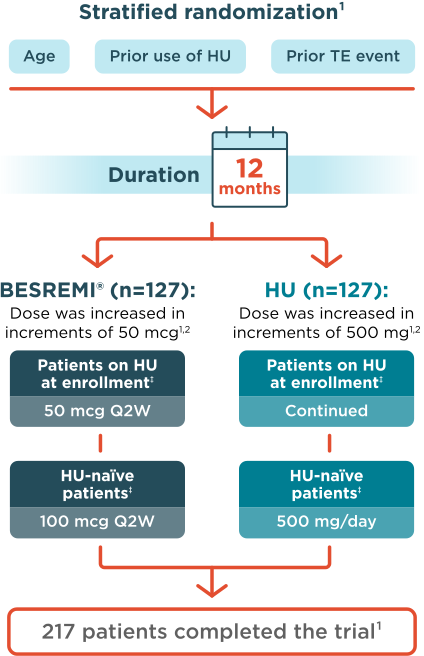
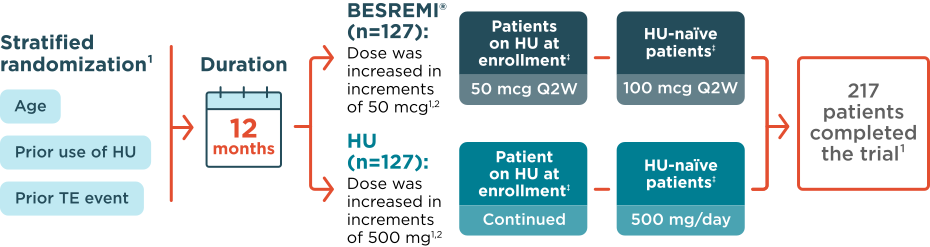
HU, hydroxyurea; PV, polycythemia vera; Q2W, every 2 weeks; TE, thromboembolic; WHO, World Health Organization
- Confirmed diagnosis of PV according to the WHO 2008 criteria.¹ †500 mcg was the maximum dose.² ‡All patients received low-dose aspirin during the trial unless contraindicated.¹
CONTINUATION-PV
Objective: Assess the long-term efficacy and safety of BESREMI® or standard 1L treatment (HU or other BAT*) in terms of disease response and changes in disease burden in patients with PV who completed the PROUD-PV trial
Key eligibility criteria1,†
- Normalization of ≥2 of 3 main blood parameters from baseline‡
- >35% decrease of ≥2 of 3 main blood parameters from baseline‡
- Normalization of spleen size
- Normalization of disease-related microvasculatory symptoms or substantial decrease of JAK2 allelic burden
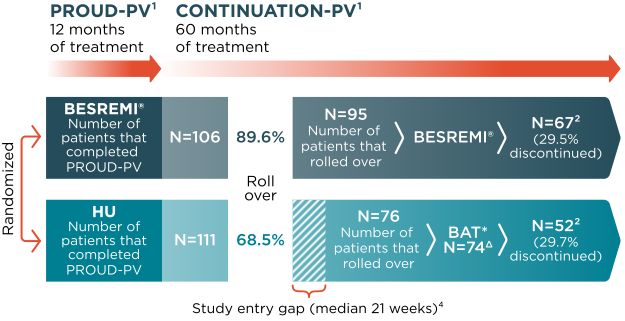
1L, first line; BAT, best available treatment; HU, hydroxyurea; JAK2, Janus kinase 2; PV, polycythemia vera.
*Hydroxyurea, conventional IFNα or pegylated IFNα (other than BESREMI®), anagrelide, a JAK2 inhibitor, phosphorus-32, or busulfan.1 †Eligible patients must have completed the 12-month PROUD-PV trial and fulfilled ≥1 of the following criteria.1 ‡Includes hematocrit, platelet count, and white blood cell count.1 Δ2 patients excluded from analysis.3
- Gisslinger H et al. Lancet Haematol. 2020;7(3):e196-e208;
- Gisslinger H et al. Leukemia. 2023;37:2129–2132 [supplementary appendix];
- Kiladjian JJ et al. HemaSphere. 2025 May 3;9(5):e70137 [supplementary appendix].
- European Medicines Agency. 2019. BESREMI® European Public Assessment Report.
References
- BESREMI® Product Monograph. July 2, 2026. FORUS Therapeutics Inc.